Meta Title: Industrial PTFE-Lined Tanks: Plating & Wet Process
Meta Description: OEM custom industrial PTFE-lined tanks, plating and wet-process vessels: welded PTFE linings, 3-8mm, -200 to 260C, acid-resistant, project MOQ and lead time.
Before you approve the purchase order for a custom industrial PTFE-lined tank, ask your fabricator these seven questions—or risk a liner that blisters within six months: (1) Is the PTFE sheet virgin or filled? (2) What is the minimum lining thickness at corners and nozzle radii? (3) Are the seams butt-welded and 100% spark-tested? (4) Is the outer shell carbon or stainless, and how is it blasted and primed before bonding? (5) Are nozzle, manway and overflow penetrations lined and flanged, or just drilled? (6) What negative-pressure / vacuum service is the liner rated for? (7) Is a mill certificate and holiday-test report supplied with the tank? Brands A, B and C quote competitive prices, but the answers separate a 15-year plating-tank asset from a re-lining emergency next spring.
Why Industrial Buyers Switch to PTFE-Lined Vessels
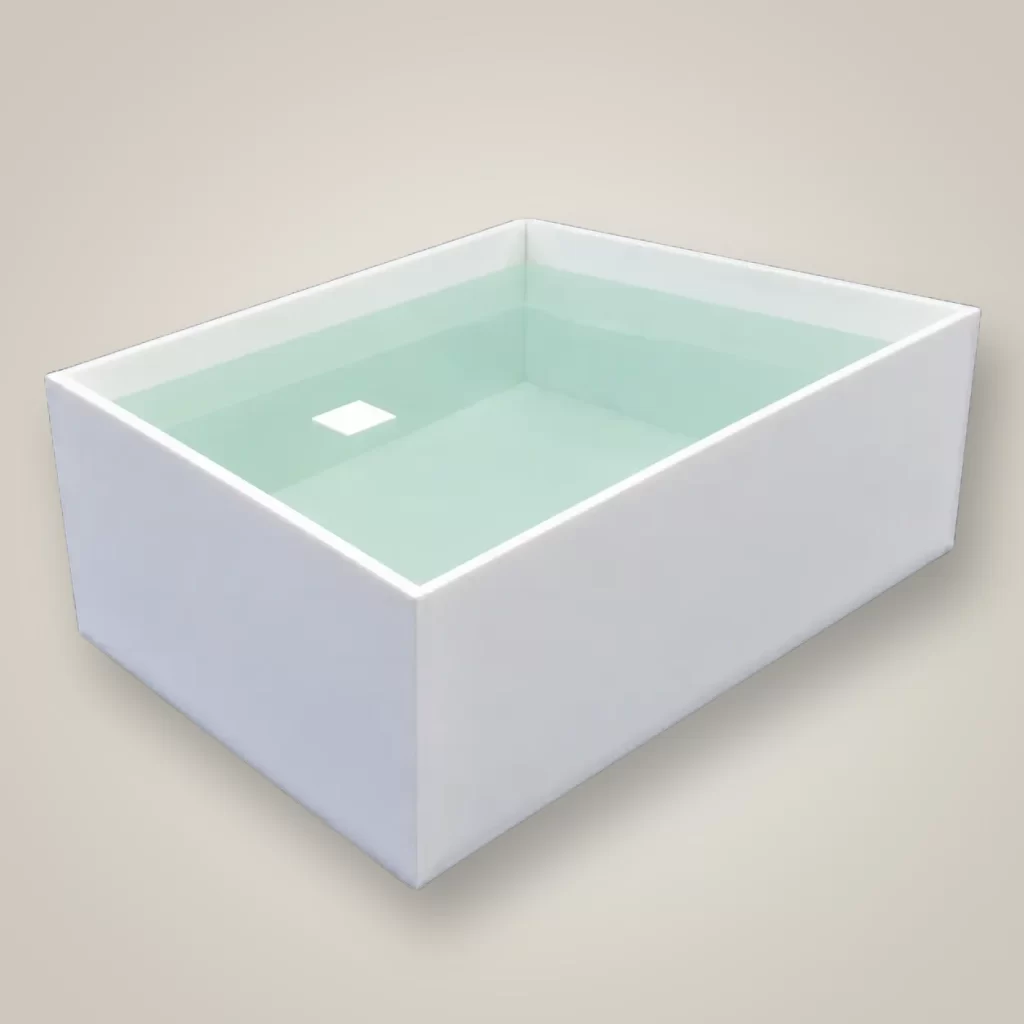
Industrial PTFE-lined tanks—not the lab-scale digestion vessels covered elsewhere, but welded 500-to-20,000 L process vessels—serve electroplating lines, semiconductor wet benches, acid storage, scrubbers and bulk chemical distribution. A carbon-steel or FRP shell carries the structural pressure, while a 3–8 mm virgin PTFE (or PFA/FEP) inner barrier blocks virtually all acids, bases and solvents across pH 0–14. For ultra-high-purity acid storage such as sulfuric acid, hydrogen peroxide and potassium carbonate on semiconductor wet benches, fully fluorinated linings are the default because they add virtually no extractables into the chemistry, as the Performance Plastics Magazine technical feature documents in real fab case studies.
Lining Construction: Sheet-Welded vs. Rotational Lining
Two methods dominate. Sheet-welded lining bonds expanded or skived virgin PTFE sheet to a blasted shell with adhesive and vacuum compaction, then butt-welds the seams; it suits large rectangular plating tanks and retrofit jobs. Rotational (roto) lining sinters PTFE powder inside a rotating shell to form a seamless barrier that follows complex openings and negative-pressure geometry, well suited to CPI vessels, as explained in the rotational-lining process comparison. Whichever method you choose, the lining material itself must be a true fluoropolymer sheet with proven weldability—AGRU’s semi-finished PTFE/PFA range and welding rods is one reference point fabricators commonly specify.
Specifying Nozzles, Penetrations and Tank Hardware
A lined tank is only as good as its penetrations. Every overflow, outlet, level port and manway must be lined through the nozzle and flanged—never a bare hole in steel. We supply matched PTFE tank nozzles and bulkhead fittings, PTFE electrical insulators for plating-busbar feed-throughs, PTFE fasteners and bolts for flange and lug bolting, and PTFE pipe tees for tank recirculation loops. Sourcing the lining and the small fluoropolymer hardware from the same shop avoids mismatched flange ratings and corner leaks.
Shell Design, Temperature and Vacuum Limits
Carbon-steel shells are standard for atmospheric storage; stainless is preferred when exterior corrosion or cleanability matters. PTFE itself runs from about -200 °C to +260 °C continuous, but the adhesive bond and FRP outer layer cap practical service near +180 °C for most lined tanks. Critical buyers specify full-vacuum (1 bar) rating and ask for anti-buffing / vacuum-pad design, because PTFE liner blistering almost always starts at a poorly supported corner under thermal cycling. For engineered fine-chem and pharma vessels, the lineage of De Dietrich Process Systems lined equipment and the Poly Processing chemical-storage design handbook set the benchmark for shell-and-liner integration.
Quality Checks Before You Accept Delivery
Require a holiday spark test at the specified kV across every welded seam, a wall-thickness report at three corner points per bay, and a mill certificate for the PTFE sheet grade. Ask also for a vacuum-decay or water-puddle check on the finished liner, and confirm that all nameplate flanges are bolted up with PTFE-coated or PTFE-fastener sets so the fastener itself never becomes the corrosion path. Confirm the lining is virgin (unfilled) for food/pharma or ultra-pure duty; filled PTFE trades chemical universality for wear and is usually wrong for a wet-process tank. The role of virgin PTFE sheet as a stable corrosion barrier in storage tanks, reactors and electroplating equipment is summarized in the PTFE-lining engineering overview. Brands A, B and C all supply lined tanks—the one that hands over the spark-test report is the one worth awarding.
Frequently Asked Questions
What sizes and volumes can you line?
We custom-fabricate PTFE-lined vessels from roughly 50 L bench tanks up to 20,000 L bulk storage and rectangular plating lines, with round or rectangular shells and custom nozzle layouts.
What lining thickness do you recommend?
Standard service uses 3 mm virgin PTFE; aggressive or abrasion-prone duty calls for 5–8 mm. We measure minimum thickness at corners and nozzle radii, not just flat walls.
Are the seams welded and tested?
Yes. All seams are butt-welded with matching PTFE rod, then 100% spark (holiday) tested at the specified voltage; a test report ships with the tank.
What temperatures and chemicals are PTFE-lined tanks rated for?
The PTFE barrier resists virtually all acids, bases and solvents across pH 0–14 from about -200 °C to +260 °C; the bonded/FRP construction typically caps continuous service near +180 °C. Molten alkali metals and elemental fluorine are exceptions.
Which industries buy custom PTFE-lined tanks?
Electroplating and surface finishing, semiconductor wet benches, acid and solvent storage, scrubbers and fume-treatment, pharmaceutical reagent holds and bulk chemical distribution are the main buyers.
What is the MOQ and lead time?
Industrial tanks are project-built, so there is no unit MOQ—one custom vessel is standard. Fabrication typically runs 4–10 weeks depending on size, nozzle count and pressure rating, with first-article drawings approved before lining starts.
Disclaimer
This article is provided for general informational purposes only and reflects typical industry ranges as of the publication date. It is not engineering, safety or regulatory advice. Lined tanks for pressure, vacuum, flammable or toxic service must be designed, inspected and stamped by qualified engineers in accordance with applicable local codes (e.g., ASME, PD 5500, GB/T). Always verify lining thickness, material grade, weld and holiday-test acceptance with the fabricator before commissioning. Competitor references (brands A, B and C) are anonymized for comparison. Consult the cited equipment manufacturers and standards bodies for authoritative ratings.