Meta Title: Custom PTFE Wear Ring: Guide & Bearing
Meta Description: Custom PTFE wear rings and guide rings: bronze/carbon/glass-filled, hydraulic piston and rod guidance, low friction, -200 to 260C, OEM MOQ.
There are two ways a hydraulic cylinder scores its chrome rod: metal-to-metal, or separated by a PTFE wear ring. The first costs $40,000 in a teardown—a scored rod, a blown seal, a production line down. The second costs $4.20 and a ten-minute swap on the bench. The math is not close, yet every quarter we still see cylinders where the wear ring has been left out, reused, or specified in virgin PTFE when the duty demanded bronze-filled. Brands A, B and C quote “PTFE guide rings” interchangeably; the difference between a 2,000-hour ring and a 20,000-hour ring is the filler package and the way it is machined. This guide covers how to specify a PTFE wear ring that actually survives.
What a Wear Ring Actually Does
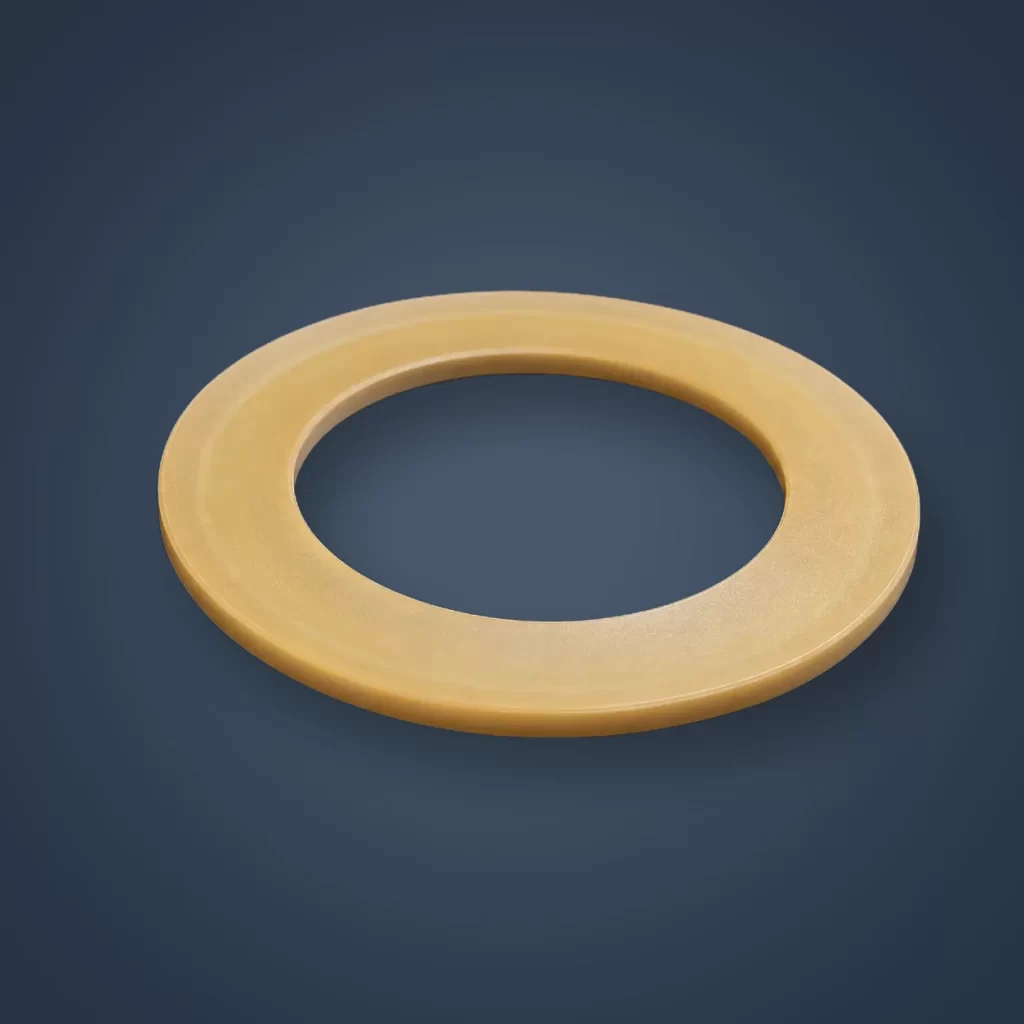
A PTFE wear ring (also called a guide ring, wear band or piston band) sits in a groove on the piston or rod guide and carries the transverse (side) load of the cylinder. It keeps the metal piston and rod from touching the metal bore and gland—that contact is what causes scoring, seal extrusion and the $40,000 teardown. It is not a pressure seal; it is a bearing surface. That distinction drives the material choice: you want a low-friction, dimensionally stable, creep-resistant composite that won’t cold-flow under side load. Virgin PTFE is chemically inert but creeps and deforms under compressive load, so wear rings are almost always filled.
Filler Recipes: Match the Filler to the Duty
The four standard filler packages map cleanly onto applications. Bronze-filled (40–60% bronze) gives the highest compressive strength and thermal conductivity for heavy, high-frequency hydraulic duty. Carbon-graphite-filled (roughly 23% carbon, 2% graphite) is the popular pneumatic and general-purpose grade—self-lubricating, long-life, and soft enough not to score soft chrome, as the Parker-lineage wear-ring specification sheet describes. Glass-filled adds wear resistance at a mid price point. Carbon-fiber-filled adds thermal and electrical conductivity for static-dissipative or high-speed service. The material-by-duty table in the CDS Plastics wear-ring selection guide and the filled-grade comparison in the Polypac piston guide-ring materials overview are two practical references for picking the right grade.
Specifying the Ring: Groove, Cut and Tolerance
Send the drawing with piston OD, groove width and depth, rod side-loaded expectation, and required temperature. Critical details: a butt-cut or step-cut ring for installation through the gland (spirals are for one-piece machined rings), a clearance gap at the cut to accommodate thermal growth, and a side-load rating in MPa. Machined from filled PTFE rod or tube stock—not skived sheet, which curls. Pair the wear ring with matched PTFE pistons for the moving assembly, add PTFE wiper seals on the rod side to keep grit out, specify PTFE bearings for the static guidance points, and finish the end stack with PTFE oil seals. Sourcing the whole reciprocating set from one shop keeps the groove tolerances compatible.
Temperature, Load and Where Filled PTFE Wins
Virgin PTFE serves from about -200 °C to +260 °C; filled grades trade a little chemical universality for much higher PV limit and lower creep. Food-grade and biocompatible PTFE bearing inserts run to 250 °C with no lubrication at all, per the Mitsubishi Chemical Advanced Materials Fluorosint bearing case study; the broader PTFE shape and grade portfolio behind these parts is catalogued by suppliers such as Ensinger TECAFLON PTFE. For rotary lip and bearing-protection seals, filled PTFE grades such as moly-glass and carbon-graphite compounds are the standard choice in engineered polymer seal products, as the Chesterton polymer seal selection guide lays out. The rule of thumb: if the system runs continuously and side-loaded, bronze or carbon-graphite; if it is chemically aggressive or food-grade, virgin or glass-filled.
Quality Checks Before You Accept the Batch
Ask for a lot certificate naming the filler package and percentage, a hardness and dimensional report on groove OD and ring thickness, and a check that the cut gap matches the design. Confirm the rings are machined (not skived) and annealed to relieve machining stress. Brands A, B and C will all supply “PTFE wear rings”; the one that names the filler grade on the paperwork is the one worth reordering.
Frequently Asked Questions
What is the difference between a PTFE wear ring and a PTFE guide ring?
They are the same component by another name. “Wear ring” emphasizes the anti-scoring function; “guide ring” emphasizes side-load guidance. Both sit in a piston or rod-gland groove and carry transverse load.
Which filler should I choose for hydraulic cylinders?
Bronze-filled (40–60% bronze) for heavy, high-frequency hydraulic duty; carbon-graphite-filled for general pneumatics and mid-load hydraulics; glass-filled for cost-sensitive general service; carbon-fiber for high-speed or static-dissipative needs.
Can you machine custom sizes and cut styles?
Yes. We machine butt-cut, step-cut and spiral-wound rings to your groove drawing, with custom IDs, ODs, wall thicknesses and cut gaps, from filled PTFE rod stock.
What temperature range do filled PTFE wear rings handle?
Filled PTFE rings typically serve from about -156 °C to +260 °C, with bronze-filled grades holding up best at the hot end; confirm the grade and mating fluid on the drawing.
Will a PTFE wear ring score a chrome rod?
Carbon-graphite and virgin PTFE grades are soft enough not to score hardened chrome. Avoid glass-filled on soft aluminum or brass shafts, where the glass fibers can abrade the mating surface.
What is the MOQ and lead time?
Trial orders start at roughly 100–500 rings; machined custom wear rings ship in 7–15 days, with first-article dimensional reports approved before production.
Disclaimer
This article is provided for general informational purposes only and reflects typical industry ranges as of the publication date. It is not engineering or safety advice. Wear rings for pressure-boundary, mobile-hydraulic, aerospace, medical or safety-critical service must be selected by a qualified engineer against the actual side load, pressure, temperature, fluid and mating material. Always verify groove geometry, filler grade and PV limits against the cylinder manufacturer’s documentation. Competitor references (brands A, B and C) are anonymized for comparison. Consult the cited seal and material manufacturers for authoritative ratings.